 Skip to main content

The Case for Modern Wi-Fi: Your Warehouse Is Fast, Your WIFI Should Be Faster
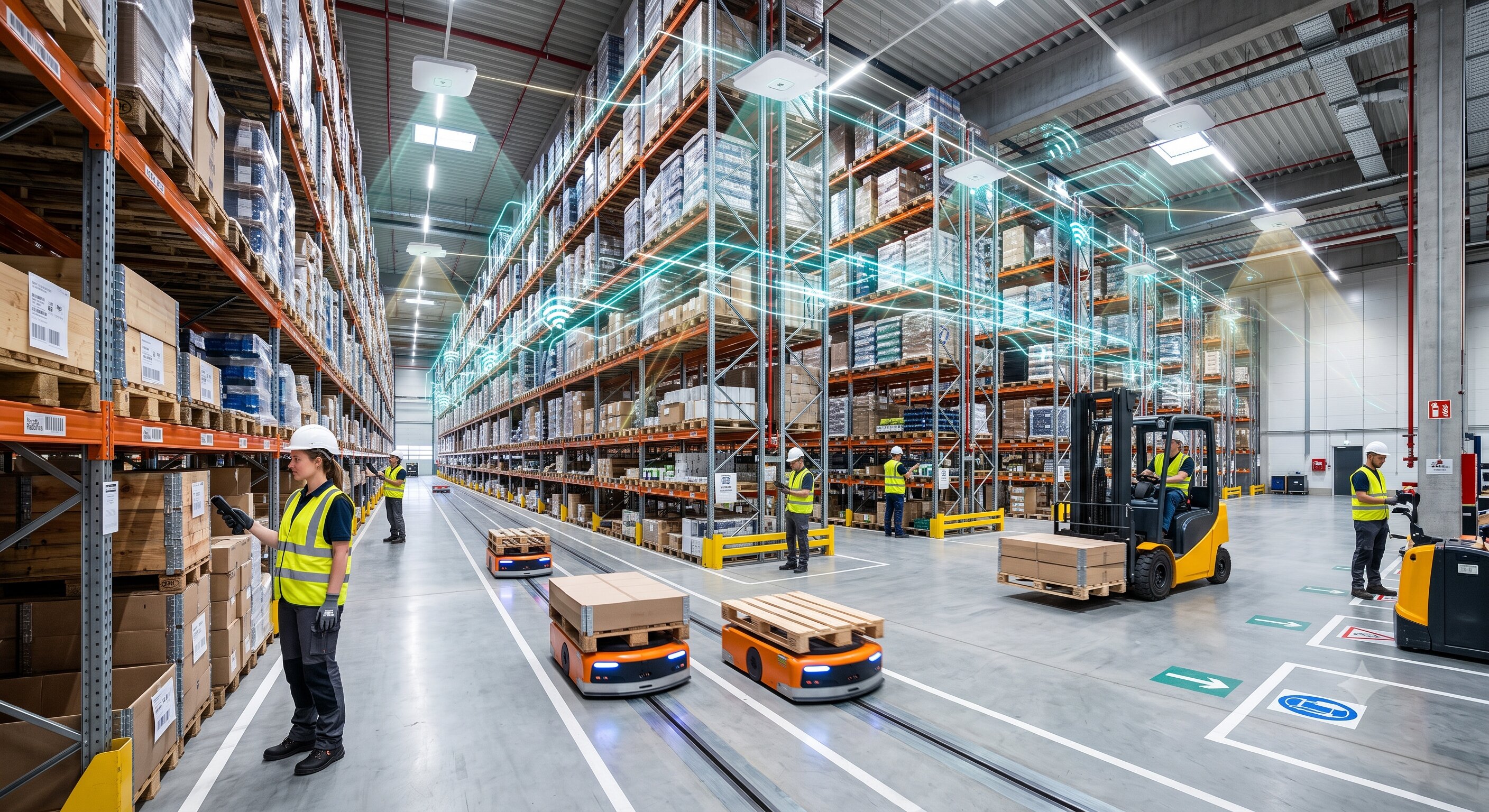
At Lane Logistics, IT strategy is centered on constantly evaluating and improving technology services to drive measurable gains in operational efficiency, accuracy, and scalability. IT strategies are converging with digital strategies as the mandate for business transformation scales across the organization, placing greater emphasis on infrastructure that can support real-time, data-driven operations. Nowhere is this more evident than in the warehouse environment, where wireless connectivity has evolved from a background utility into core infrastructure that directly impacts the business bottom line. Internet connectivity is no longer a convenience or an afterthought, but the core infrastructure. Every critical process for mobile handheld usage, barcode scanning, autonomous robotics, and real-time inventory management depends on fast, stable, and ubiquitous Wi-Fi coverage. Through continuous monitoring and performance analysis, it becomes clear that aging wireless networks introduce hidden inefficiencies: coverage gaps slow movement, latency disrupts real-time transactions, and limited device capacity creates bottlenecks during peak activity. These issues compound over time, affecting throughput, increasing error rates, and placing unnecessary strain on labour resources. Regularly upgrading Wi-Fi technology is therefore not simply a technical refresh but a strategic initiative that unlocks performance improvements, strengthens reliability, and supports evolving operational demands. Modern Wi-Fi standards deliver higher speeds, better device handling, improved security, and greater resilience, all of which contribute directly to smoother workflows, reduced downtime and higher processing throughput. As warehouse operations continue to adopt automation and data-driven decision-making, the importance of a robust wireless foundation only increases. Five key reasons why upgrading Wi-Fi technology is essential to maintaining a competitive, efficient, and future-ready warehouse operation.
Core 3PL Services Explained
1. Faster Speeds Returns Higher Processing Throughput

The difference in wireless speed between legacy and modern Wi-Fi technology highlights why regular upgrades are a strategic necessity. Older access points typically support speeds of up to 1.2 Gbps, which was once more than sufficient for basic warehouse operations. Today’s environment demands significantly more. Modern Wi-Fi solutions can support speeds of up to 5.7 Gbps, offering a substantial increase in capacity that directly impacts how efficiently work gets done. This increase is not just about faster internet. The increase enables more devices to operate simultaneously without slowing each other down, supports real-time data processing, and reduces delays that interrupt order processing. In a warehouse setting where every second counts, even small lags in connectivity can compound into meaningful productivity losses over time. Faster wireless performance allows for quicker scanning, more responsive systems, and smoother coordination across teams and technologies. As operations continue to evolve with greater reliance on automation and real-time systems, the gap between what older networks can handle and what is required continues to widen. Investing in an upgraded Wi-Fi infrastructure ensures the network can keep pace with operational demands and remove bottlenecks while improving overall efficiency and throughput.
2. Better Coverage Across Complex Layouts
Improving coverage across complex warehouse layouts is another critical reason to regularly upgrade Wi-Fi infrastructure. Warehouses present unique challenges, including high ceilings, dense metal racking, constantly moving inventory with varying product density, as well as layouts that shift over time. These conditions can interfere with wireless signals. Older Wi-Fi systems often struggle to maintain consistent coverage, resulting in dead zones or unreliable connectivity in key operational areas. Modern wireless solutions are designed to address these challenges by delivering stronger signal penetration through dense storage environments, more uniform coverage across expansive floor spaces, and improved roaming capabilities for mobile workers along with equipment. This means devices can maintain a stable connection as users move throughout the facility without experiencing drops or delays. From a business perspective, consistent coverage ensures that critical tasks such as scanning, picking, and real-time system updates can occur without interruption. Eliminating connectivity gaps reduces downtime, prevents workflow disruptions, and improves overall operational flow. As warehouse environments continue to evolve in complexity, having a wireless network that can adapt and provide reliable coverage everywhere is essential to maintain efficiency and to support day-to-day operations.

3. Stronger Security and Network Control
Cybersecurity has become a critical priority in modern logistics operations, where warehouses routinely process sensitive information, including customer data and detailed shipment records. Legacy wireless infrastructure, such as aging wireless access points (WAPs) and routers running outdated firmware, introduces significant risk due to unpatched vulnerabilities and the absence of current security standards. As manufacturers announce equipment as End-of-Life, security updates cease, leaving known weaknesses exposed and easily exploitable. As warehouse environments become increasingly connected and data-driven, the wireless network itself becomes a primary point of exposure if not properly secured. Older Wi-Fi systems lack the protections required to defend against evolving threats - creating exploitable gaps. Transitioning to modern Wi-Fi standards mitigates these risks by introducing stronger encryption protocols, such as WPA3, enhanced device authentication, and improved network segmentation. All together these improvements provide greater control over network access and ensure only authorized users and devices can connect. By isolating critical operational systems from general network traffic, organizations can significantly reduce the likelihood and impact of unauthorized access or data breaches. From a business perspective, strengthening wireless security extends beyond risk mitigation; it supports regulatory compliance, preserves customer trust, and ensures operational continuity, enabling organizations to operate with confidence in an increasingly complex cybersecurity landscape.
4. Enhanced Support for Real-Time Operations
Real-time visibility is critical for efficient warehouse management, as operations increasingly rely on accurate, up-to-the-second data to function effectively. Whether tracking inventory, updating order status, or coordinating automated systems, even minor delays in data transmission can create bottlenecks that slow down the entire workflow. Modern Wi-Fi infrastructure addresses this challenge by enabling near-instant communication between devices, systems, and platforms, including employee dashboards that display up-to-date ERP information directly to workers on the floor. Inventory updates occur immediately as items are scanned or moved, reducing discrepancies and improving stock accuracy. Picking and packing processes become more precise, as workers can rely on current information without second-guessing or rechecking data. In addition, decision-making is driven by real-time insights rather than delayed or outdated inputs, allowing supervisors and systems to respond quickly to changing conditions on the floor. From a business perspective, this level of responsiveness directly improves throughput while reducing costly errors and rework. As warehouses continue to adopt more advanced systems and automation, the ability to maintain consistent, real-time visibility becomes essential to sustaining efficiency and meeting operational demands.
5. Automation Futureproofing
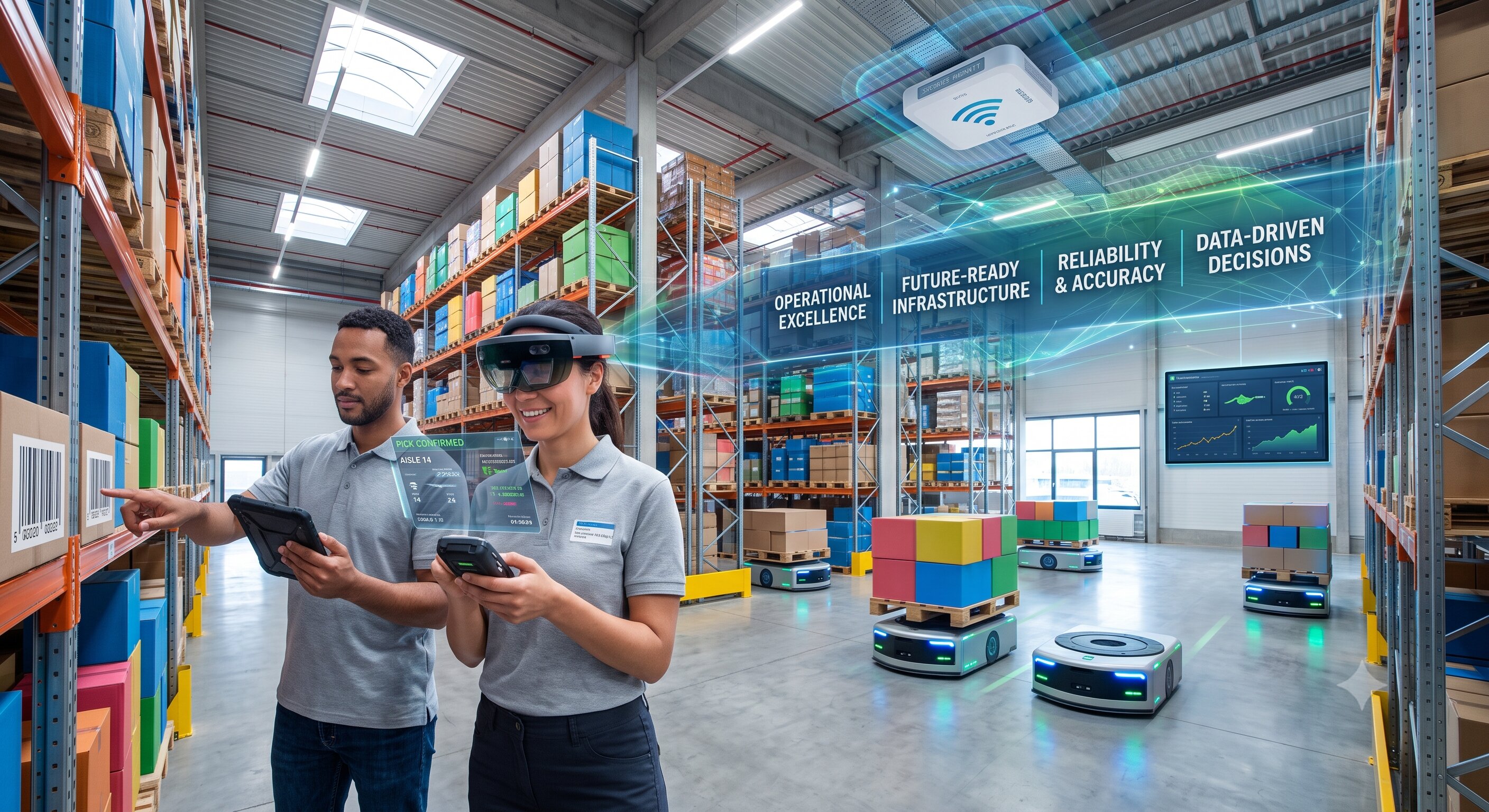
Futureproofing for automation and growth is a key consideration as warehouse operations continue to evolve at a rapid pace. Investments in robotics and AI-driven analytics, along with expanding IoT ecosystems are quickly becoming standard, placing increased demand on the underlying wireless infrastructure. A modern Wi-Fi network ensures readiness for these advancements by providing the capacity and reliability needed to support automation initiatives without disruption. As device counts grow, from handheld scanners to autonomous systems, scalable connectivity becomes essential to maintain consistent performance across all operations. An upgraded infrastructure also ensures compatibility with next-generation technologies, allowing new systems to be integrated seamlessly without requiring reactive fixes or costly redesigns. Rather than waiting for performance issues to surface, taking a proactive approach allows organizations to build a strong, adaptable foundation that supports long-term innovation. From a strategic standpoint, this positions the business to adopt new technologies with confidence, improve operational efficiency, and remain competitive as industry expectations continue to advance.
Conclusion
In a warehouse environment, network performance directly impacts operational performance, making Wi-Fi a critical driver of efficiency in day-to-day operations rather than a background service. Upgrading to the latest wireless technology is not just an IT improvement, it’s a strategic investment in reliability, accuracy, and long-term growth. As demands on warehouse systems continue to increase, organizations that modernize their wireless infrastructure position themselves to move faster, operate smarter, and scale with confidence in an increasingly competitive logistics landscape. Proactively identifying and acting on these opportunities ensures that technology evolves in step with operational needs rather than reacting to limitations after they arise. By treating Wi-Fi as a core, actively managed service, IT leadership enables stronger day-to-day performance while establishing a resilient, future-ready foundation that can support ongoing innovation and business expansion.